Image Recognition
Automate visual asset management, tagging, inspections, categorization, and more with reliable image recognition feature development.

A 45-minute session with a solution architect. You leave with a ranked shortlist and a rough build envelope.
Book an AI Strategy CallDriving Better Automation, Higher Security, & Faster Execution Across Industries with Real-Time Video, Image, and document analysis powered by AI & Deep Learning.
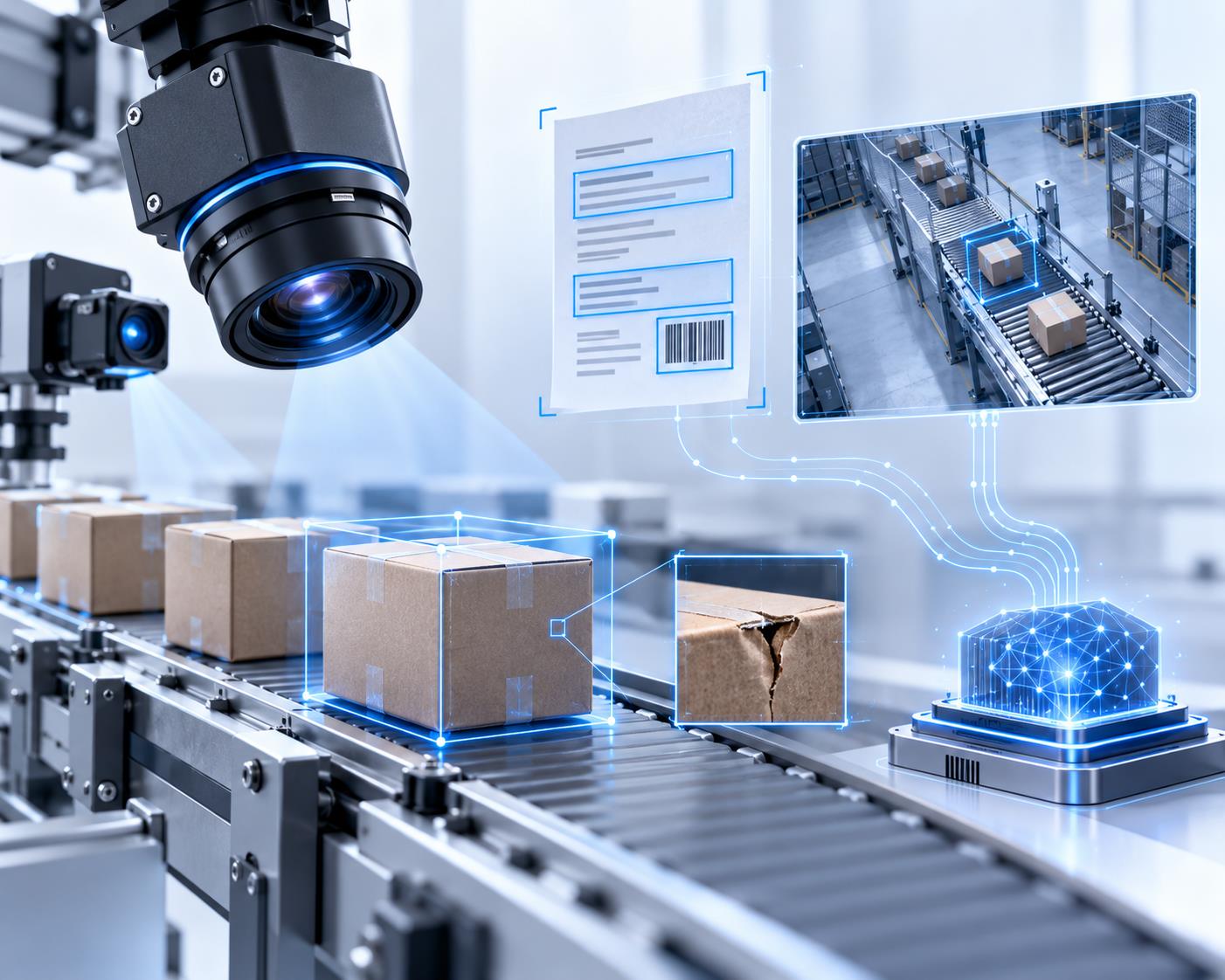
What if your business software systems can ‘see’ while the team focuses on core business processes? Automate visual business operations with higher speed, accuracy, and reliability with our Computer Vision development services. From object recognition to information extraction & data collection from documents for reporting, we hyperautomate business operations.
Automate visual asset management, tagging, inspections, categorization, and more with reliable image recognition feature development.
Enhance security with accurate CCTV video pattern analysis, real-time stream analysis, and behavioral tracking.
Experience higher business security with instant identification of security breaches, anomalous activities, and deviations.
Get high-accuracy facial biometric mapping and presence verification features for software applications.
Complete the documentation process and remove manual data entry with document AI capabilities like OCR & ICR development.
We specialize in custom computer vision software development services. Whether integrating a CV feature into legacy systems or building a CV solution from scratch, our computer vision experts deliver tailored solutions.
We help businesses find the best-fit computer vision solution that aligns with their business requirements, goals, budget, and infrastructure with our IT consulting services.
We’re a complete digital product engineering company that builds tailored solutions unique to a business and its requirements. Our CV solutions are also tailored.
We integrate computer vision capabilities as a feature with legacy software modernization, including ERPs, CRMs, HRMS, or any other custom-built software.
Our computer vision development experts can also optimize the performance of existing CV systems for faster and glitch-free business operations.
Being a client-first AI & software development company, here are some of our most recommended computer vision use cases for businesses across different industries. Pick one from our recommended set or discuss a unique business requirement. We’re ready to build everything.
In addition to the above use cases, as an AI Product Development Company, we build secure, scalable, and compliant custom computer vision solutions for all business industries. Our CV experts build end-to-end process automation experiences that help industries execute faster with higher task accuracy.
HIPAA-compliant computer vision solutions for X-ray, MRI, CT scan analysis, anomaly detection, intelligent clinical imaging workflows, and more.
SOX and AML-compliant solutions for KYC verification, document validation, cheque processing, and biometric authentication.
PCI-DSS compliant systems for smart shelf monitoring, visual search, customer tracking, and loss prevention.
ISO and OSHA-compliant solutions for defect detection, assembly line monitoring, safety compliance, and predictive maintenance.
DOT-compliant solutions for package tracking, barcode recognition, inventory scanning, and damage detection.
Enable facial recognition, intrusion detection, crowd monitoring, and suspicious activity alerts with secure surveillance frameworks.
NHTSA-compliant systems for driver monitoring, lane detection, object tracking, parking assistance, and traffic analysis.
Get crop monitoring, pest detection, soil analysis, drone mapping, and yield prediction systems with computer vision.
FERPA-compliant computer vision solutions for attendance tracking, exam & attention monitoring, and classroom analytics.
Enable video tagging, content moderation, and automated media indexing systems with computer vision application development services.
FISMA-compliant solutions for traffic monitoring, crowd management, surveillance, and infrastructure tracking.
FDA 21 CFR Part 11 and GxP-compliant computer vision solutions for lab imaging, packaging inspection, and clinical analysis.
We follow a systematic and agile development process for computer vision projects. Our team carefully analyzes your business requirements, curates a CV development strategy that aligns with your goals, and engineers a tailored solution.
Our senior engineers hold a consulting session and gather your business requirements to identify the project goals.
Our Computer Vision developers build a tailored strategy covering the Scope of Work (SoW), tech stack recommendation, budget, and more.
Then, our software engineering team builds a suitable CV solution with an agile approach. Testing goes along with an accurate solution.
Our team finally integrates the tested and QA-approved engineered computer vision solution into your business workflows.
Our team continues to deliver routine product updates and maintenance for a glitch-free and latency-free user experience.
We build scalable, secure, and highly accurate computer vision solutions using a standard and powerful technology stack built upon a robust ecosystem of AI frameworks, deep learning libraries, image processing tools, cloud platforms, and deployment technologies.
Discover success stories in Computer Vision Development planned, executed, and maintained by our engineering team. From in-house projects to US-based businesses, we are building an intelligent era with CV technologies.
Growing real estate businesses across the UAE struggle with scattered lead sources, manual property listing creation, delayed follow-ups, and disconnected broker, agent, and channel partner management. Multiple software subscriptions and repetitive manual processes slow down sales cycles and affect lead conversions.
Ezulix has developed a first-of-its-kind Real Estate CRM powered by Artificial Intelligence, Generative AI, Predictive AI, and Computer Vision. It unifies lead management, property listings, inventory, channel partners, marketing automation, and customer relationship management into a single platform.
A Texas-based clothing manufacturing business (Identity Protected Under NDA) was struggling with manual fabric inspection, inconsistent quality checks, and delayed identification of stitching defects and garment imperfections across its production lines. The manual inspection process was slowing production while allowing defective garments to reach the final quality assurance stage.
Our Computer Vision engineers developed an AI-powered visual inspection system that automated garment quality inspection across the production line. By combining image recognition, object detection, anomaly detection, and real-time video analytics, we enabled the manufacturer to identify quality issues instantly while maintaining consistent inspection standards.
Driving Better Automation, Higher Security, & Faster Execution Across Industries with Real-Time Video, Image, and document analysis powered by AI & Deep Learning.